

High-Speed Steel (HSS) End Mills
Haas M2 (HM2)
HM2 series milling cutters are center-cutting, 2- and 3- flute high-speed steel (HSS) end mills for machining aluminum and other non-ferrous materials. M2 high-speed steel, with molybdenum and tungsten as its main elements, provides outstanding wear resistance and hardness.
Bright/uncoated finish prevents the material from sticking/galling to the cutter, when used with mist or coolant.
HEPM and HEHM
Chip Splitters and Roughing End Mills
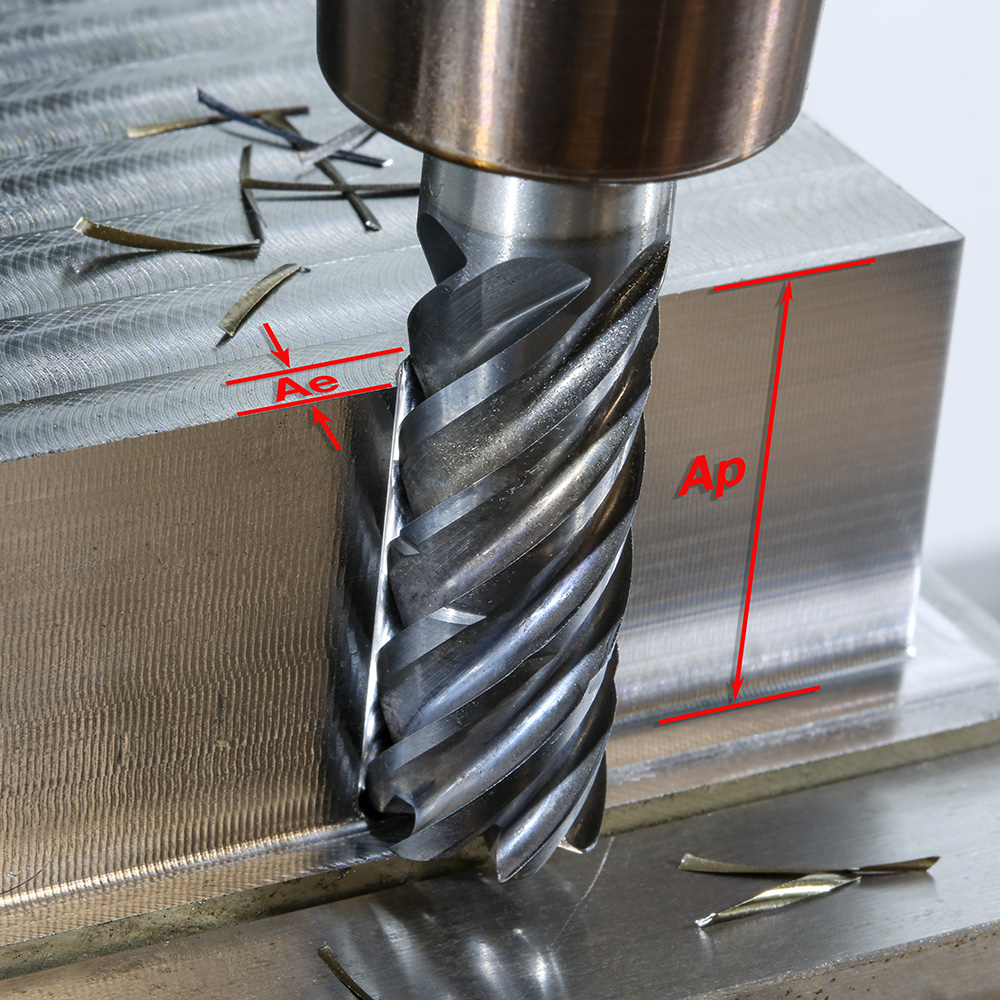
When you're machining pockets with an end mill it's not uncommon to get a stack of chips in the pocket that's hard to get out.
Mark takes a look at several styles of end mills that cut your chips into smaller pieces, making them a lot easier to get out of the pocket before your end mill gets damaged re-cutting those same chips.
Square
• Corners have a sharp, square profile
• 90° cutting angle
• Most common corner type
• Used for slotting, profiling, and plunge milling
• Creates flat bottoms with square corners
Chamfer
• Corners have 45° chamfer
• Helps distribute cutting forces evenly
• Prevents damage to the end mill
• Extends corner life
• Creates flat bottoms with slightly chamfered corners
Radius
• Corners have slight a radius
• Helps distribute cutting forces evenly
• Prevents damage to the end mill
• Extends corner
• Creates flat bottoms with slightly radiused corners
2-Flutes
Recommended for non-ferrous materials. Two-flute end mills have long been the industry standard when cutting aluminum and other non-ferrous alloys, where chip clearance is important to efficient material removal. The massive valleys between the two flutes accommodate the larger chips produced by high feed-per-tooth feedrates on softer materials.
3-Flutes
Recommended for non-ferrous materials. Fewer flutes allow for excellent chip clearance on larger chips, and deeper cut depths. Ideal for aluminum in heavy roughing and finishing applications.
4-Flutes
Recommended for ferrous materials. The low flute count allows for excellent chip clearance for general purpose roughing and slotting. Ideal for steel, stainless, and cast iron.
5-Flutes
Recommended for ferrous materials. Higher flute count increases the tool strength, but reduces the cut depths. Ideal for finishing or high-efficiency milling in steel, stainless, cast iron, and harder materials.
6-Flutes
Recommended for ferrous materials. High flute count yields a thicker core for greater tool strength and less deflection, while increasing material removal rates. Ideal for high-efficiency/high-speed milling in steel, stainless, cast iron, and high-temp alloys